

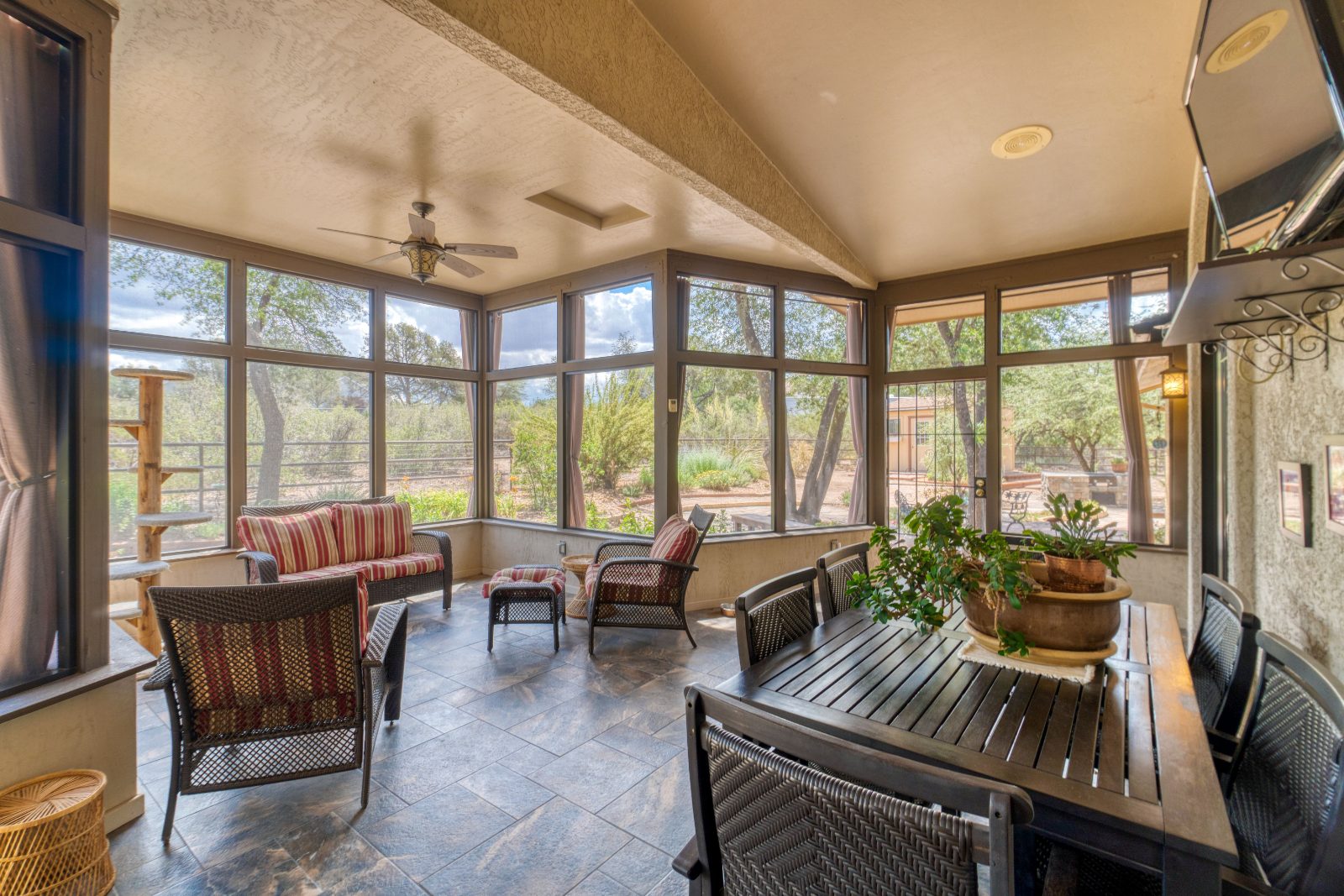
A homeowner off Park Boulevard in Pinellas Park walks out to the lanai the morning after a September squall line and finds two panels of the pool cage flapping loose and a spline hanging like a shoelace. Ten years ago she would have typed “pool cage rescreening Pinellas Park” into Google and called whoever sat in the map pack. This year she opens ChatGPT on her phone, types “who rescreens pool enclosures near Pinellas Park and what should it cost,” and gets three company names, a price range and a warning about permits — all in about four seconds. If your company wasn’t one of those three names, you never had a chance at the job.
Pinellas Park screen enclosure companies are missing from AI search because the answer engines can’t find enough consistent, specific, third-party-confirmed information about them to name them with confidence. The fix is not a trick. It is publishing exactly the facts a homeowner asks for — services, service area, prices, turnaround, permits, warranty — in plain language on your own site and Google Business Profile, then earning enough reviews and mentions that ChatGPT, Gemini, Perplexity and Google’s AI Overviews treat you as a safe recommendation.
What actually happens when a homeowner asks an AI who to call
Google’s AI Overviews rolled out to U.S. searches in May 2024 and now sit above the traditional results for a large share of question-style queries. Google added AI Mode, a full conversational tab, in 2025. ChatGPT, Gemini and Perplexity all browse the live web for local questions. None of these systems keep a list of Pinellas Park screen contractors. Every time they answer, they retrieve pages, weigh which ones look trustworthy, and synthesize a recommendation.
That retrieval step is where most local enclosure companies fall out. The systems favor sources that state facts plainly, agree with each other and can be corroborated. A study from researchers at Princeton, Georgia Tech, the Allen Institute for AI and IIT Delhi, published as “GEO: Generative Engine Optimization” at KDD 2024, tested which content changes made a page more likely to be cited by generative engines. Adding specific statistics, direct quotations and clear source citations improved a page’s visibility in AI answers by up to 40 percent in their benchmark.
Google’s own developer documentation on AI features says there is no special markup or secret setting to get into AI Overviews; it uses the same index and the same quality signals as regular search. Independent analyses from Ahrefs and Semrush in 2025 found that most pages cited in AI Overviews were already ranking on the first page for related queries. So AI visibility is not a separate discipline bolted onto local SEO. It is local SEO done with more precision than your competitors are willing to apply.
Why screen enclosures are a harder trade for AI to recommend
Roofers and plumbers have a head start: thousands of directories, decades of review volume and clear category labels. Screen enclosure work is messier. One company rescreens, another builds aluminum structures, a third does both plus pavers and pool decks. Google Business Profile doesn’t have a clean primary category called “pool cage rescreening,” so companies pick “Screen repair service,” “Contractor,” “Aluminum supplier” or “Sunroom contractor” and the engines can’t tell what you actually do.
Add the Pinellas geography problem. Pinellas Park sits between Largo, Seminole, Kenneth City and St. Petersburg, and most enclosure companies serve all of them from one shop. If your site says “serving the Tampa Bay area” and nothing more specific, an AI answering a Pinellas Park question has no evidence you work there. Meanwhile a competitor in Seminole with a page titled “Pool Cage Rescreening in Pinellas Park” and six reviews mentioning Pinellas Park by name looks like the obvious local choice.
The five things AI engines need to see before they name you
1. A primary category and description that say what you do
On Google Business Profile, choose the single category that best matches the majority of your revenue and add the others as secondary. Then write the 750-character business description the way you’d answer a neighbor: rescreening, full pool cage replacement, lanai and porch enclosures, storm damage repair, super-screen and no-see-um mesh, and the cities you serve by name. That description is retrievable text.
2. One page per real question, written in plain English
Every question a Pinellas Park homeowner asks an AI should have a page on your site that answers it directly in the first paragraph: How much does it cost to rescreen a pool cage? Do I need a permit to repair a screen enclosure in Pinellas County? How long does a full cage replacement take? What’s the difference between 18/14 mesh and 20/20 no-see-um screen? Can you replace just the roof panels? Each page should open with the answer, then explain, then show a local photo.
3. Real numbers, even ranges
The GEO study is blunt on this: pages with specific figures get cited more. Publish your actual per-panel rescreen pricing, your typical range for a full cage on a standard 15-by-30 pool, your lead time in peak season versus January, and your warranty terms in years.
4. Reviews that mention the city and the job
Review volume matters, but review content matters more for AI retrieval. A review that says “great job” is nearly worthless to a model trying to answer “who rescreens pool cages in Pinellas Park.” A review that says “they rescreened our entire cage in Pinellas Park in one day after the storm, pulled the permit for the two bent beams, and the price matched the quote” is a citable local fact. Ask for reviews with a two-line prompt that invites the customer to mention the neighborhood and the specific work. Never write reviews for customers or incentivize them; Google’s policies and the FTC’s 2024 rule on fake reviews both carry real penalties.
5. Consistent facts everywhere else
Your business name, address, phone, service list and service area should match across your site, Google Business Profile, Bing Places, Apple Business Connect, Yelp, Nextdoor, the Better Business Bureau and your Florida DBPR license listing. AI engines cross-check. A phone number that differs on Yelp, a service area that lists Hillsborough on one profile and Pinellas on another, or an expired-looking license page all lower the engine’s confidence and push it toward a competitor whose story holds together.
The Pinellas storm cycle makes this urgent, not optional
Hurricane season runs June 1 through November 30, and Pinellas County learned in the fall of 2024 how quickly enclosure work can spike: Helene’s surge and Milton’s wind, which came ashore at Siesta Key that October, left screen and aluminum damage across the county. When that demand hits, homeowners don’t browse; they ask a device for the fastest reputable option and call the first name they’re given. Companies that built their AI visibility in the quiet months capture that surge; companies that wait are trying to earn citations the same week everyone else is.
The seasonal play is simple. From December through April, publish the answer pages, fix the profile categories, collect the city-specific reviews and clean up the directory listings. By the time the first named storm forms, the engines have had months to crawl, index and corroborate you. Positioning strategist Al Ries called this owning a word in the prospect’s mind. Here the word is “Pinellas Park pool cage,” and the prospect’s mind now includes an AI assistant.
How to check whether you’re visible today
Open ChatGPT, Gemini and Perplexity and ask each one the same three questions a homeowner would: “Who rescreens pool cages in Pinellas Park?”, “How much does pool cage rescreening cost in Pinellas County?” and “Best screen enclosure company near Pinellas Park FL.” Then run the same phrases in Google, note whether an AI Overview appears and who it cites, and write down which pages were linked. If you don’t appear, the five gaps above are almost always the reason, and each is fixable in a quarter.
Frequently asked questions
Why doesn’t my screen enclosure company show up in ChatGPT or Google AI Overviews?
AI engines recommend businesses they can verify from multiple consistent sources. If your website doesn’t name Pinellas Park and your specific services in plain text, your Google Business Profile uses a vague category, and your reviews don’t mention the city or the work, the engine has no evidence to cite you and defaults to a competitor whose information is clearer.
Does AI search visibility require different work than local SEO?
No. Google states that AI Overviews use the same index and ranking systems as regular search, and independent studies have found most AI-cited pages already rank on page one. AI visibility is local SEO executed with more specificity: direct answers, real numbers, city-level pages and detailed reviews.
Should I publish my pool cage rescreening prices online?
Yes, at least as ranges. Research on generative engines found that pages with specific statistics are cited significantly more often, and homeowners asking an AI for a price are getting one from whichever source published it. A published range from your company beats a national aggregator’s estimate and pre-qualifies the calls you receive.
Which Google Business Profile category should a screen enclosure company use?
Choose the primary category that matches most of your revenue, such as “Screen repair service” for rescreening-focused companies or “Contractor” for firms that build full aluminum structures, then add relevant secondary categories. Use the business description to spell out rescreening, cage replacement, storm repair, mesh types and the Pinellas cities you serve.
How many reviews does a Pinellas Park enclosure company need to be recommended by AI?
There is no published threshold, and review content matters as much as count. A steady flow of recent reviews that mention Pinellas Park by name and describe the specific job gives AI engines citable local evidence. Ask every completed job for a review and prompt customers to mention their neighborhood and the work performed, without offering incentives.
How long does it take to start appearing in AI search results?
Most companies see changes within one to three months of fixing profile categories, publishing answer pages and collecting detailed reviews, because AI engines re-crawl active local sites frequently. Building durable visibility across ChatGPT, Gemini, Perplexity and Google AI Overviews typically takes a full off-season of consistent publishing.
If you run a screen enclosure or pool cage company in Pinellas Park, Largo, Seminole or anywhere in Pinellas County and you’re not sure whether AI assistants are naming you, find out before the next storm decides it for you. Forty-Second Street helps Tampa Bay home-service contractors get found in Google and AI search with the specific, verifiable content the engines reward.
Keep reading
See where you stand: get a free AI visibility audit and find out whether Tampa Bay homeowners can find you in Google and AI search.
NiceJob: Get more reviews about pool cages, since AI tools read reviews before they name you.
CallRail: See which calls come from search so you know if AI is sending jobs.