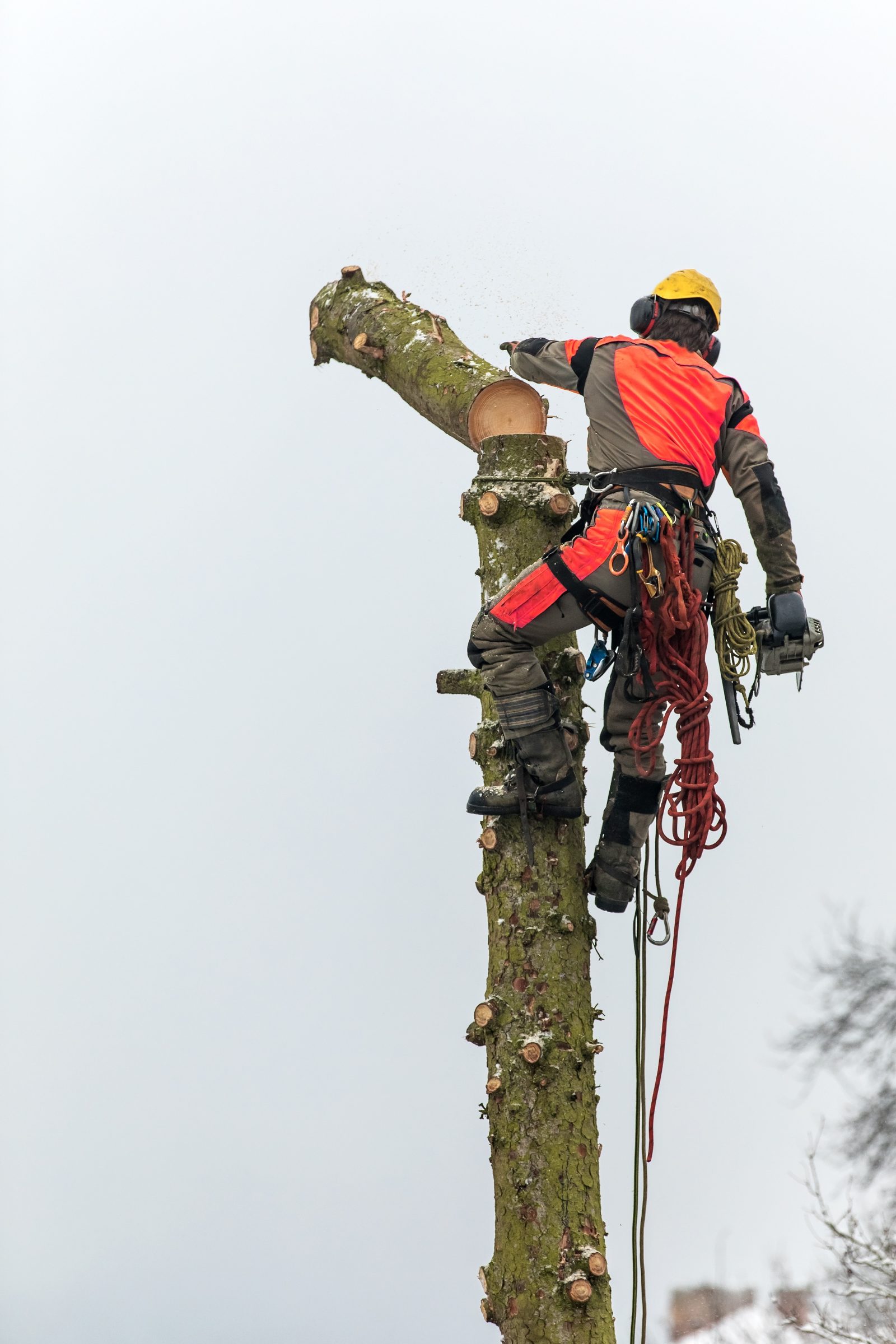
Tree service in Tampa Bay is a hurricane business with a maintenance business attached. Two events drive most of the revenue: the trimming a homeowner books before the season because they are worried about the oak over the roof, and the removal they book at six in the morning after a limb comes through it. Marketing that covers only one of those leaves half the year unclaimed.
How homeowners search for tree service
There are two entirely different searches here. The planned one looks like "tree trimming near me", "palm trimming Clearwater", "certified arborist", or "do I need a permit to remove a tree", and it behaves like any considered home-services purchase. Three quotes, a week or two of thinking, price compared line by line. The emergency one looks like "emergency tree removal", "24 hour tree service", "tree on house", typed on a phone at dawn with no price research at all. That caller works down the results until a human answers, which makes answering the entire competitive advantage. Both spike together the moment a named storm enters the Gulf, and the planned searches climb steadily through May and June as the season approaches.
What makes tree service different
Ticket size swings wider here than in almost any trade. A palm trim and a large oak removal over a pool cage with a crane arrive as the same phone call. Liability is the real differentiator, and informed homeowners ask for proof of insurance before they ask for a price, because a dropped limb becomes their problem if the crew is uninsured. Local tree ordinances add a step, since several Tampa Bay municipalities protect certain species and sizes, and removal cannot start until that is resolved. The company that handles the paperwork often wins by default. After a storm, insurance enters the conversation when a tree strikes a structure, which changes both the pace and the documentation, and out-of-state crews flood the market for a few weeks.
The seasonal pattern in Tampa Bay
Hurricane season runs June 1 through November 30 and peaks August through October, and this business is shaped entirely around it. Preventive demand builds in late spring. May and June bring homeowners who want limbs pulled back off the roof and dead wood out of the canopy before anything forms. Every named storm that enters the Gulf triggers a burst of pre-storm trimming, then a much larger wave of emergency removal and debris hauling behind it. Because the growing season here runs twelve months, canopy work never fully stops, and palms follow their own cycle. The genuine trough is late winter, January into March. Use it for maintenance-plan offers, crane and canopy photography, and building review volume before summer.
Where tree service companies lose the job
- Missing after-hours and during-event calls, when the entire emergency segment is decided
- Hiding licensing and insurance proof, so a nervous homeowner picks the company that posted the certificate
- Quoting a removal without addressing the municipal permit question, which lets a cheaper bid look equivalent
- Showing no photos of large removals, crane work or tight access between a house and a pool cage
- Never converting the post-storm emergency customer into a recurring trimming customer
What to measure
The most important number in this trade is not cost per lead. It is inbound call answer rate, broken out by hour, because the emergency segment is decided by who picks up at six on a Sunday morning. That number lives in the phone system, not the CRM. Second, split close rate and average ticket by job type, meaning removal, trimming, palms and stump work, because blending them hides which advertising produces profitable jobs. Third, track how many storm-emergency customers return for planned trimming within roughly eighteen months. That conversion is where the year's margin actually sits, and it does not happen unless someone follows up after the debris is gone.
Questions tree service owners ask
Is it worth advertising outside of storm season?
Yes, and late winter is the cheapest time to do it. Competitors pull back in January and February, which lowers the cost of being visible right as homeowners start thinking about the oak they meant to deal with last year. Winter spend also builds the review volume and local ranking that decide who gets found in August, when nobody has time to build anything.
How do I compete with the crews that show up after a hurricane?
By already being known before they arrive. Out-of-state crews have no local review history, no municipal permit familiarity and no address, so the homeowner's hesitation works in your favor if your name is already established. Publish local licensing and insurance, keep a visible record of storm work in named neighborhoods, and make sure the phone is answered when theirs is a call center.
Should I put prices on my website?
Ranges, not prices. Removal cost depends on species, height, proximity to structures and access, and a fixed number will either lose you profitable work or trap you into unprofitable work. What converts is explaining the variables clearly, which builds trust with the planned buyer and does nothing to slow the emergency caller, who is not comparing anything.
For owners who would rather have this built before next June, here is how we handle tree service marketing.