

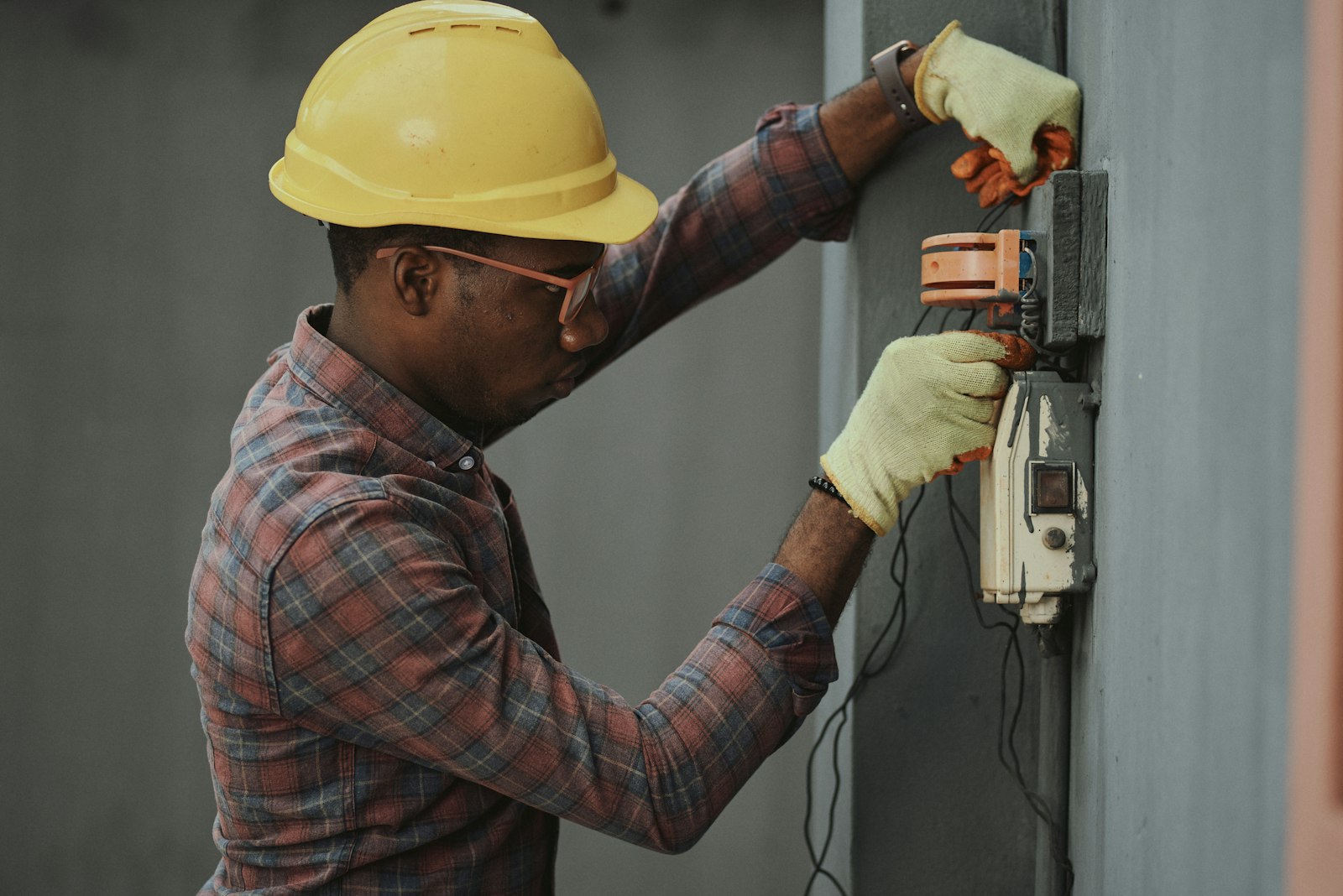
It’s 7 p.m. on a Tuesday in Palm Harbor. A homeowner off Alderman Road just lost power to half her house, and the breaker won’t reset. She does what nearly everyone does now: she picks up her phone and types “electrician near me.” Three companies fill the Google map pack. She taps the first one, sees a wall of five-star reviews, and calls. Your truck is parked two miles from her house — closer than any of the three she saw — but you never appeared on her screen.
Palm Harbor electricians rank for high-intent “near me” searches when they build dedicated service-area pages — one focused page per town and per core service — instead of forcing a single homepage to rank for everything. Google’s local algorithm rewards relevance, proximity, and prominence, and a proper service-area page structure is the only on-site asset that feeds all three at once.
Most contractor websites in Pinellas County get this backwards. They have one homepage that says “Serving all of Tampa Bay,” a generic “Services” page, and a contact form. That tells Google almost nothing specific, so Google ranks the competitor whose site says “Palm Harbor electrician” in plain language on a page built for exactly that search. This is fixable, and it doesn’t require a bigger ad budget.
Why one homepage can’t rank a Palm Harbor electrician
A homepage is a generalist. It has to introduce your company, list every service, cover every city, and convert every type of visitor. Search engines reward the opposite of a generalist: the most specific, most relevant page for a specific query. When a homeowner searches “panel upgrade Palm Harbor” or “EV charger installation Dunedin,” Google is looking for a page that is unmistakably about that service in that place.
If your one homepage is competing for “electrician Palm Harbor,” “electrician Dunedin,” “electrician Tarpon Springs,” “panel upgrade,” “generator installation,” and “EV charger install” all at once, it is diluted across a dozen intents and dominates none of them. Contractors who separate those intents onto their own pages consistently out-rank the all-in-one homepage, because each page earns its own relevance signal, its own internal links, and its own reviews and photos.
How Google actually ranks local services
You don’t have to guess at this. Google’s own documentation for local ranking (the “Improve your local ranking on Google” help article) names three factors: relevance, distance, and prominence. Relevance is how well your listing and website match the search. Distance is how close you are to the searcher (or to the location in their query). Prominence is how well-known and trusted you are — driven heavily by reviews, links, and citations.
You can’t move your building closer to a customer, but you can control the other two. Service-area pages are a direct lever on relevance: a page titled “Electrician in Palm Harbor, FL” that describes local neighborhoods, permitting through Pinellas County, and the specific work you do there is far more relevant than a homepage that lists eight cities in a footer. And the annual Local Search Ranking Factors study led by Darren Shaw at Whitespark — the industry’s most-cited expert survey on this topic — has for years shown that on-page signals and a well-structured website sit among the strongest contributors to organic and local-pack visibility, alongside Google Business Profile signals and reviews.
The service-area page structure that wins
Think of your site as a grid: core services down one axis, the towns you serve across the other. You are not writing a thousand pages — you are building the handful of combinations that match real, high-intent searches in your market. For a Palm Harbor electrician, a strong starting grid looks like this:
- City pages: Electrician in Palm Harbor, Dunedin, Tarpon Springs, Palm Harbor’s Ozona and Crystal Beach areas — the specific places you actually serve.
- Service pages: Panel upgrades, whole-home rewiring, generator installation, EV charger installation, and electrical inspections — each on its own page.
- High-value combinations: Where a service has strong local demand (say, “generator installation in Palm Harbor” ahead of hurricane season), build the dedicated city-plus-service page. These are your money pages.
Each page needs to be genuinely written for a human, not spun from a template with the city name swapped in. Google’s Search Quality Rater Guidelines put real weight on E-E-A-T — experience, expertise, authoritativeness, and trustworthiness. A page that references real jobs (a panel upgrade on a 1970s Palm Harbor home, code requirements for coastal properties), includes photos of your crew and permits, and answers the questions a nervous homeowner is actually asking will beat a thin, mass-produced page every time.
The on-page signals that make each page rank
A service-area page earns its ranking with a few non-negotiables. The primary keyword belongs in the page title, the H1, the URL, and the first paragraph — stated plainly, not stuffed. Add LocalBusiness / Electrician structured data (schema.org) with your name, address, phone, and service area so search engines and AI systems can parse exactly who and where you are. Include a short FAQ block on each page with real questions, marked up with FAQ schema, because that same structured content is what feeds AI Overviews and assistants like ChatGPT when a homeowner asks for a recommendation.
Then connect the pages. Internal links from your homepage and blog to each service-area page pass authority and help Google understand the hierarchy of your site. Embed a Google map, keep your name-address-phone identical to your Google Business Profile down to the punctuation, and make the phone number tappable on mobile — where the overwhelming majority of “near me” contractor searches happen.
Prominence: reviews and links do the rest
Relevance gets you into contention; prominence decides the order. The single highest-leverage move most Palm Harbor electricians can make is a simple, consistent process to earn Google reviews — texting a review link the moment a job is finished and the customer is happiest. Pair that with a handful of legitimate local citations (chamber of commerce, Pinellas trade directories, supplier partner pages) and links from local sources, and you build the prominence Google needs to trust you over a competitor with a thinner profile. Reviews also do double duty: they are the social proof that converts the visitor once your page finally shows up.
What to do in the next 30 days
Start narrow and finish something. Pick your single most profitable service and your single best town — for many Palm Harbor electricians that’s generator or panel-upgrade work in Palm Harbor proper. Build one excellent city-plus-service page with real photos, an FAQ, schema, and a tappable call button. Point a few internal links at it. Turn on a text-based review request for every completed job. That one page and that one habit will teach you more about what moves your rankings than any theory — and it compounds every month you leave it live.
Frequently asked questions
How many service-area pages does a Palm Harbor electrician need?
Fewer than you think, and only for places and services you genuinely serve. Start with three to five town pages for the areas you actually cover and one page per core service, then add city-plus-service pages only where there is real search demand. Ten to fifteen strong, human-written pages beat fifty thin ones, because Google rewards depth and relevance, not volume.
Do service-area pages count as duplicate content and hurt my SEO?
Only if you mass-produce them by copying one template and swapping the city name. That is exactly what Google’s guidelines penalize. Genuinely unique pages — with specific neighborhoods, real project examples, local details, and distinct FAQs — are not duplicate content and are actively rewarded. The dividing line is whether a human would find the page useful, not whether it shares a general topic with your other pages.
How is a service-area page different from my Google Business Profile?
Your Google Business Profile is what appears in the map pack and Google Maps; your service-area pages live on your own website. They work together: the profile drives local-pack visibility, and the matching website pages reinforce relevance and give the profile somewhere authoritative to link to. Contractors who optimize only their profile and ignore their site leave the organic results — and increasingly, AI answers — on the table.
How long does local SEO take to rank a new service-area page?
For a specific, lower-competition local query, a well-built page can start appearing within a few weeks to a couple of months, then climb as it earns internal links, reviews, and prominence. More competitive terms take longer. The honest answer is that local SEO is a compounding asset, not an on-off switch — but unlike paid ads, the leads keep coming after you stop actively working on it.
What is AEO and does it change my SEO plan?
AEO — answer engine optimization, sometimes called GEO for generative engine optimization — is about getting cited when homeowners ask ChatGPT, Gemini, Perplexity, or Google’s AI Overviews for a recommendation instead of scrolling a list of links. The good news for Palm Harbor electricians is that the fundamentals overlap: clear, well-structured pages, FAQ and LocalBusiness schema, consistent business information, and strong reviews are exactly what AI systems pull from. A solid service-area page strategy is the foundation for both.
The contractors winning Palm Harbor’s high-value electrical jobs aren’t necessarily the best electricians — they’re the ones a homeowner can actually find at 7 p.m. with a dead panel. Build the pages that match how people search, earn the reviews that prove you’re trusted, and you stop losing jobs to the company two miles farther away. If you want a second set of eyes on where your site stands today, that’s exactly the kind of thing we do.
Keep reading
See where you stand: get a free AI visibility audit and find out whether Tampa Bay homeowners can find you in Google and AI search.