

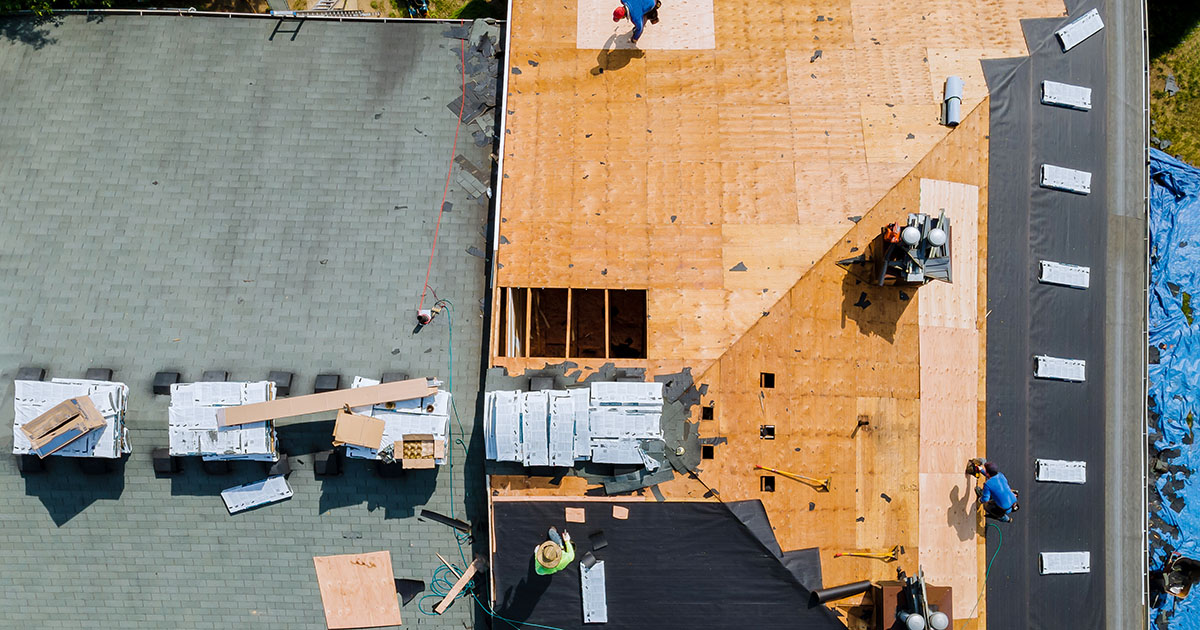
It is the week after a summer squall line rolls across Pinellas County, and a Clearwater homeowner walks the yard to find shingle tabs in the flower beds and a dark stain spreading across the garage ceiling. Three trucks have already left door-hangers. Two of them belong to companies with out-of-state plates parked at the Extended Stay off Gulf-to-Bay. She does what almost every homeowner now does before she calls anyone: she opens her phone and searches “roof repair Clearwater,” then reads.
For a $20,000 roof, Clearwater homeowners do not buy the lowest bid—they buy the roofer they trust, and trust is decided almost entirely by your reviews before you ever pick up the phone. The local roofer who has built a deep, recent, well-answered review profile beats the out-of-town storm chaser with a cheaper number every time, because the homeowner has already concluded the local company is the safer place to spend $20,000.
That is not a soft branding opinion. It is how high-consideration purchase decisions work, and roofing is one of the highest-consideration purchases a homeowner makes outside of buying the house itself. Below is exactly why reviews decide the roofing job in Clearwater, what the research says, and the specific moves that separate the roofer who wins the premium job from the one who competes on price and loses money doing it.
Why reviews decide the roofing job before price ever comes up
Roofing sits in what marketers call a high-risk, high-ticket category: the price is large, the decision is infrequent, the homeowner cannot easily judge quality in advance, and the cost of choosing wrong is severe—water in the walls, a botched insurance claim, a contractor who disappears after the deposit. When perceived risk is high, buyers do not optimize for the lowest price. They optimize for the lowest risk of a bad outcome. Reviews are the single strongest risk-reduction signal a homeowner has.
The numbers back this up. BrightLocal’s annual Local Consumer Review Survey has consistently found that the overwhelming majority of consumers read online reviews for local businesses, and that a large share will not consider a business below a roughly four-star threshold. Harvard Business School’s Michael Luca, studying Yelp data, found that a one-star increase in rating can drive a 5–9% increase in revenue for independent businesses—and that the effect is strongest exactly where consumers lack other information about quality, which describes a homeowner choosing a roofer perfectly. Nielsen’s long-running trust research keeps landing in the same place: people trust the recommendations and opinions of other people far more than they trust any message a company writes about itself.
For a Clearwater roofer, that means the review profile is doing the selling before your salesperson ever gets in the driveway. The storm chaser knows this too—which is why so many of them arrive with thin, generic, or suspiciously clustered reviews. That thinness is your opening.
The out-of-town storm chaser’s weakness is local proof
Storm-chasing crews follow weather. After a Tampa Bay storm they flood the market, quote aggressively, and bank on urgency and a low number to close fast before moving to the next county. Their structural weakness is that they cannot manufacture a genuine local track record. They do not have four years of Clearwater, Dunedin, and Palm Harbor homeowners naming streets and neighborhoods in their reviews. They do not have the roofer replying by name, referencing the specific job, and showing up in photos on a recognizable Pinellas roofline.
This is where a local roofer’s reputation becomes an unfair advantage. A review that says “replaced our tile roof off Sand Key after Hurricane season and walked our insurance adjuster through every line” does something no price quote can do: it tells the next homeowner that this company has done exactly her job, in exactly her area, and handled exactly the part she is afraid of. Al Ries and Jack Trout’s core lesson in Positioning applies directly—you do not win by being cheaper, you win by owning a clear, credible position in the customer’s mind. “The trusted local roofer Clearwater homeowners actually name” is a position a transient crew cannot take from you.
Recency and volume beat a frozen 5.0
Here is the counterintuitive part most contractors get wrong: a perfect 5.0 rating from twelve reviews two years ago loses to a 4.7 from 180 reviews with fresh ones every week. Homeowners have learned to read a flawless, low-volume profile as either too new or too curated to trust. Volume signals that a lot of people took the risk and lived to review it. Recency signals the company is still operating at that level right now, not coasting on old work.
Google’s local ranking systems reinforce the same behavior. Google states plainly that review count and review score factor into local search ranking, and that responding to reviews signals that a business values its customers. A steady flow of recent, on-topic reviews—mentioning “roof replacement,” “storm damage,” specific Clearwater and Pinellas neighborhoods—feeds both the homeowner’s trust and the Google Map Pack algorithm at the same time. One system decides whether you get seen; the other decides whether you get chosen. Reviews are the rare asset that moves both.
Your review replies are sales copy the whole market reads
Most roofers treat review replies as a chore, if they do them at all. That is a mistake. Every reply is public, permanent, and read by the next prospect—not the person who left the review. A calm, specific, accountable reply to a critical review is often more persuasive than the five-star reviews above it, because it shows the homeowner what happens when something goes wrong. Nobody believes a company never has a problem. They want to know how you behave when you do.
Donald Miller’s StoryBrand framework is useful here: in the customer’s story, she is the hero and you are the guide. Your reply should confirm you understood the problem, took responsibility for your part, and resolved it—never argue, never get defensive, never blame the customer. A reply that reads “You were right that our crew left debris in the side yard—we came back the next morning and our project manager Dave walked the property with you” sells the next $20,000 job better than any ad you could buy.
How to build a review engine that wins the premium job
Winning on reputation is not luck; it is a system. The roofers who dominate Clearwater’s high-ticket jobs run a deliberate review engine. James Clear’s work in Atomic Habits explains why the winners pull away: they make the good behavior obvious and easy and repeat it until it compounds. A single request at the right moment, done every single job, becomes a moat competitors cannot copy in a season.
The mechanics that matter most: ask every satisfied customer at the moment of peak satisfaction—the walk-through when the new roof is done and the yard is clean, not a week later by email. Make it frictionless with a direct link or a QR code the crew lead hands over on a card. Ask for specifics (“mention the neighborhood and what we fixed”) so the review does double duty for trust and for search. Respond to every review within 24 to 48 hours, positive and negative. And route unhappy customers to a phone call first so problems get solved in private and reviews get earned in public. Do that on every job and within a year your profile is something no storm chaser can match.
Frequently asked questions
How many Google reviews does a Clearwater roofing company actually need?
There is no magic number, but volume relative to your local competitors is what matters. If the established roofers ranking in the Clearwater Map Pack have 150 to 300 reviews, a profile with 20 will read as new and risky no matter how high the star rating. Aim to out-review the top three companies in your service area and keep a steady flow of recent ones, since homeowners and Google both weigh recency heavily. Consistency over months beats a one-time push.
Should I worry more about my star rating or my number of reviews?
Both, but they do different jobs. Your star rating gets you past the homeowner’s minimum threshold—most people filter out anything under roughly four stars. Your review count and recency are what build genuine confidence for a large purchase like a roof. A 4.7 with 200 recent reviews will almost always beat a 5.0 with 15 old ones, because volume proves many people took the risk and recency proves you are still delivering.
How do I handle a negative review without losing the next customer?
Reply publicly, quickly, and without defensiveness, because your reply is read by future prospects, not just the reviewer. Acknowledge the specific issue, take responsibility for your part, and state what you did to make it right. Then move the detailed back-and-forth to a phone call. A composed, accountable response to a bad review often builds more trust than your positive reviews, because it shows homeowners exactly how you behave when something goes wrong.
Can out-of-town storm-chasing roofers really be beaten on reputation alone?
Yes, and reputation is precisely where they are weakest. Transient crews cannot fake years of local reviews from named Clearwater, Dunedin, and Palm Harbor neighborhoods, and they rarely have the owner replying by name to each one. When a homeowner is deciding who to trust with $20,000, a deep local track record beats a lower quote from a company she has never heard of and cannot verify. Lean into local proof they cannot replicate.
Is it legal to offer customers an incentive for leaving a review?
Paying for or incentivizing reviews violates Google’s policies and can trigger review removal or profile penalties, and the FTC treats undisclosed incentivized reviews as deceptive. The compliant approach is to make it easy and to ask every customer—not to buy reviews. A frictionless request at the moment the job is finished, delivered to every satisfied homeowner, produces far more reviews over time than any incentive would, without the risk to your profile.
How quickly can improving reviews change how many roofing calls I get?
Reputation compounds rather than spikes, but the early gains come faster than most roofers expect. A disciplined review engine typically produces a visibly stronger, higher-volume profile within a few months, and that improvement tends to lift both Map Pack visibility and call-to-close rates together. The compounding is the point: the roofer who starts requesting and responding on every job today is building a lead over competitors that widens every month.
The bottom line for Clearwater roofers
If you are competing on price against storm chasers, you are fighting on the one battlefield where they are strong and you bleed margin. Move the fight to reputation—deep, recent, specific, well-answered reviews from real Pinellas County homeowners—and you win the $20,000 job on trust while keeping your pricing intact. The roofer with the strongest local review engine does not just rank higher; they close warmer, faster, and at better margins, because the homeowner decided before the estimate ever started.
If you want to know whether Clearwater and Pinellas County homeowners can actually find and trust your roofing company in Google and in AI search—and where the gaps are costing you premium jobs—that is exactly the kind of thing worth measuring before your next storm season.
Keep reading
See where you stand: get a free AI visibility audit and find out whether Tampa Bay homeowners can find you in Google and AI search.
NiceJob: Get a steady stream of new roofing reviews so your proof stays fresh and local.