

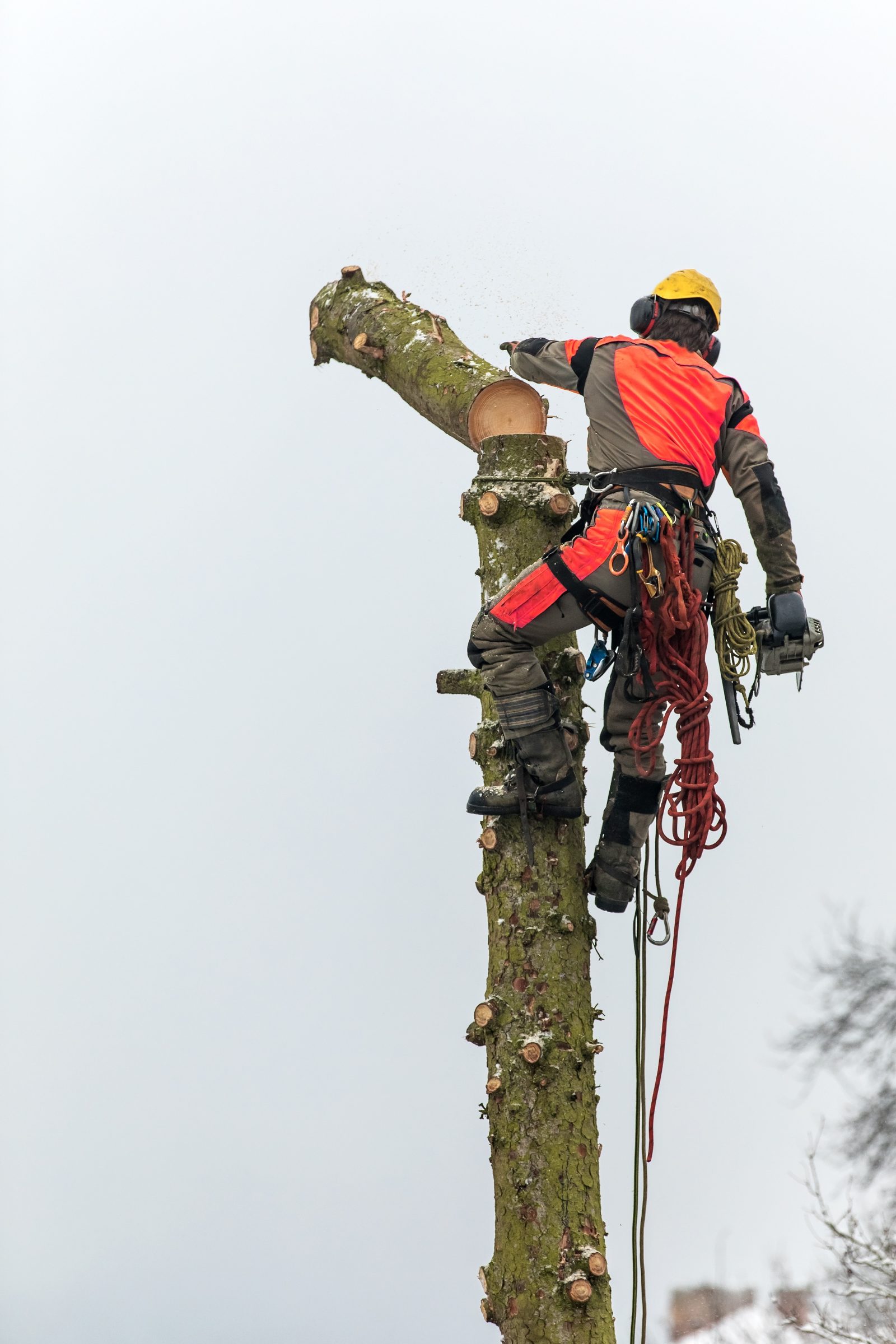
The morning after a tropical storm pushes across Pinellas County, a laurel oak on Whitcomb Bayou has split at the trunk and is leaning on a screen enclosure. The homeowner does what almost everyone in Tarpon Springs does: types “tree removal near me” into Google and calls the top result in the map pack. That top result is a crew that drove in from another county last week, set up a Google Business Profile with a rented mailbox on Tarpon Avenue, and will be gone by Thanksgiving. The company that has cut trees on that street for fifteen years is listed fourth and never gets the call.
The direct answer: Tarpon Springs tree services lose storm-season work because the Google map pack decides who gets the first call, and the map pack is won by the Google Business Profile that best signals relevance, proximity and prominence at the moment the homeowner searches. A profile with the right categories and service area, a steady stream of specific recent reviews, fresh photos and posts, and a phone line that is answered will beat a pop-up listing every time.
Why the map pack decides storm work in Tarpon Springs
Google publishes the three factors that decide local rankings: relevance (how well the profile matches the search), distance (how close your location or service area is to the searcher) and prominence (how well known the business is, measured largely through reviews and mentions across the web). Whitespark’s annual Local Search Ranking Factors survey, the most cited study of what actually moves map-pack rankings, has ranked Google Business Profile signals as the single largest factor group for years, with review signals second.
That matters more in tree work than almost any other trade, because storm demand is compressed. NOAA puts the climatological peak of the Atlantic hurricane season on September 10, and the searches that follow a storm are not researched decisions. A homeowner with a tree on the roof is calling the top of the map pack until someone answers. If your profile is not in the top three for “tree removal Tarpon Springs” and “emergency tree service near me” before the storm, the season is mostly decided before you start the chainsaw.
The out-of-town crew problem, and why Google cannot tell the difference
Every season, crews from outside Pinellas set up here for a few months. Some are legitimate businesses expanding their territory. Others create a new Google Business Profile with a virtual office or a friend’s address, name it something like “Tarpon Springs Emergency Tree Removal,” and collect a handful of reviews from the first jobs. Google’s guidelines prohibit both tactics, a business must use its real-world name and a real operating address, and you should report listings that break them through “Suggest an edit.”
Reports resolve slowly, and Google judges both listings by the same signals. A three-month-old listing with 14 fresh reviews and 30 photos can outrank a fifteen-year-old company with 22 reviews, the last from 2023, filed under “Landscaper.” Google is not rewarding the newcomer for being new. It is rewarding the profile that looks more active and more relevant, and that is the part you control.
Fix one: set the categories and service area the way Google expects
Your primary category should be “Tree service.” Not “Landscaper,” not “Lawn care service,” and not “Contractor.” The primary category carries the most weight in matching your profile to a search, and tree-removal searches map to the tree-service category. Add secondary categories only where you truly do the work, such as “Arborist and tree surgeon” or “Stump removal service,” because every extra category dilutes the primary a little.
Tree services are service-area businesses. If customers do not walk into your yard, Google’s guidelines say to hide the address and list the areas you serve. List them as the places you actually cover, which for most Tarpon Springs companies means Tarpon Springs, Holiday, Palm Harbor, East Lake, Crystal Beach, Dunedin and Trinity, not the whole of Florida. Hiding the address does not reduce visibility inside those areas. Listing a storage lot as a storefront can get the profile suspended right when you need it most.
Fill in every field. Mark “Open 24 hours” only if a human answers at 2 a.m. Write the description in plain words, oak and pine removal, hurricane trimming, crane work, stump grinding, and add services with price ranges, because that is what Google surfaces when a homeowner wants a rough cost before calling.
Fix two: reviews that mention the storm, the street and the tree
BrightLocal’s Local Consumer Review Survey has found, edition after edition, that roughly three in four consumers regularly read online reviews when choosing a local business. For tree work the review matters twice, once for the ranking and once for the click. A review that says “great job” does little for either. A review that says “they removed a split laurel oak off our lanai in Whitcomb Bayou the day after the storm, cleaned up the yard and were done by noon” tells Google your profile is relevant to “storm tree removal Tarpon Springs” and tells the homeowner you have done exactly their job.
Ask at the moment the job ends, by text, before the truck leaves the driveway, and say what would help: the type of tree, the neighborhood and what the crew did. Never gate reviews by asking only the customers you expect to be happy, which violates Google’s policy. Reply to every review, including the bad ones, in a short factual sentence. And aim for a steady rate, not a burst: ten reviews over ten weeks looks like a working business, ten in one afternoon looks like the pop-up crew.
Fix three: photos, posts and Q&A that prove you were here before the storm
A pop-up listing cannot fake a history. Your profile can show one. Post job photos weekly through the off-season so the profile carries months of dated, local images before demand spikes: a crane removal off a Spring Bayou home, a pine cleanup on Lake Tarpon, the crew at the Sponge Docks. Caption them with the neighborhood and the work; Google reads that text, and homeowners recognize the streets.
Use Google Posts the same way: hurricane-preparation trimming in May and June, permit rules in July, emergency availability the week a storm is forecast. Seed the Q&A section with the questions you hear on every call, insurance, permits, crane access, emergency pricing, and answer them from the business account. That is the text Google pulls into the profile when a searcher asks the same thing.
Fix four: answer the phone, because the profile only wins the click
The map pack gets you the call. It does not get you the job. In storm season, homeowners call down the list until someone picks up, and the first live answer usually books the estimate. If your profile number rings to a voicemail while the crew is on a roof, the ranking you earned goes to the second listing. Route the profile number to a line answered live, forward it to a second phone when crews are out, and turn on missed-call text-back so an unanswered call gets a booking link within a minute. Then compare the calls Google reports against the calls your office logged; in September that gap is usually the most expensive number in the business.
What Florida law and the local tree ordinance mean for your profile
Tarpon Springs, like most Pinellas municipalities, requires a permit to remove protected trees above a certain trunk diameter, and homeowners increasingly know it. Florida Statute 163.045, passed in 2019 and tightened in 2022, lets a residential owner skip the local permit when an ISA Certified Arborist or Florida-licensed landscape architect documents in writing that the tree presents an unacceptable risk under the industry’s tree-risk assessment standard. If you have a certified arborist with the Tree Risk Assessment Qualification on staff, say so in the description and in a service listing. It is a defensible reason to call you rather than the crew with no credentials.
Florida does not license tree services at the state level, which is why pop-up crews can operate at all. Your insurance, workers’ compensation and arborist credentials are invisible from the map pack unless you put them on the profile.
A 30-day storm-season profile plan
Week one: verify ownership, fix the primary category, hide the address, set service areas, rewrite the description and add services with price ranges. Week two: photograph five recent jobs with neighborhood captions, seed six Q&A entries, and send a specific review request to every customer from the last 90 days. Week three: set up call routing and missed-call text-back, publish two Google Posts, and report any competitor listing using a fake address or keyword-stuffed name. Week four: compare Google’s call report with your booked estimates and fix the biggest gap. Then repeat the review and photo cadence weekly until November. None of it needs a budget, only an owner who treats the profile as the front door of the business.
Frequently asked questions
How many Google reviews does a Tarpon Springs tree service need to rank in the map pack?
There is no fixed number, because Google ranks the three map-pack results on relevance, distance and prominence against the other tree services near the searcher. A Tarpon Springs company with a steady flow of recent reviews that name the work, oak removal, storm cleanup, stump grinding, will usually outrank a competitor with more total reviews that stopped arriving a year ago.
Should a tree service hide its address on Google Business Profile?
Yes, if customers do not come to your location. Google’s guidelines say service-area businesses should hide the address and list the areas they serve, and doing so does not reduce map-pack visibility inside those areas. Listing a storage yard or home as a storefront misrepresents the business and can trigger a suspension.
Does a tree service need a license in Florida to advertise on Google?
No. Florida does not issue a state license for tree trimming or removal, so Google does not require one. Credentials still matter: Florida Statute 163.045 lets a homeowner remove a tree that an ISA Certified Arborist or Florida-licensed landscape architect has documented as an unacceptable risk without a local permit, which makes a credentialed arborist a real selling point on your profile.
How fast should a tree service answer Google Business Profile calls during storm season?
Immediately, or as close as you can manage. Storm-season callers work down the map pack, and the first live answer usually books the estimate. Route the profile number to a line that is answered live, forward it to a second phone when crews are in the field, and use missed-call text-back so an unanswered call still gets a reply within a minute.
If your tree service ranks below an out-of-town crew this season, the profile is the reason and the profile is the fix. Forty-Second Street builds Google Business Profiles, review systems and AI-search visibility for home-service contractors across Pinellas, Pasco and Hillsborough, and we can show you exactly where your listing loses before the next storm does.
Keep reading
See where you stand: get a free AI visibility audit and find out whether Tampa Bay homeowners can find you in Google and AI search.
NiceJob: Ask tree customers for reviews that name the storm, the street, and the tree.
Vida: An AI agent picks up storm calls day and night so local work stays local.